

|
Quick Answer Buffalo leather is thicker, more textured, and better suited to rugged, cold-weather wear, while cow leather is lighter, smoother, and breaks in faster for everyday use. Both are full-grain, long-lasting materials. Riders and outdoor workers usually prefer buffalo leather; daily commuters and city wearers usually prefer cow leather. |
Quick Verdict: Which Leather Should You Buy?
|
Your Priority |
Best Choice |
|
Best for riders and motorcycle wear |
Buffalo Leather |
|
Best for daily, everyday jackets |
Cow Leather |
|
Best budget option |
Cow Leather |
|
Best premium, rugged look |
Buffalo Leather |
|
Best for cold, harsh winters |
Buffalo Leather |
|
Best for mild fall and spring weather |
Cow Leather |
|
Fastest break-in comfort |
Cow Leather |
Choosing between buffalo leather and cow leather is one of the most common questions men ask before buying a leather jacket. Both come from large, thick-skinned animals, and both are counted among the most durable hides used in outerwear today. But they behave differently on the body, age differently, and suit different lifestyles.
After years of crafting jackets from both hides, we've noticed a clear pattern at USA Leather Craft: customers who commute daily or wear a jacket over office clothes almost always prefer cowhide, because it softens and molds to the body within a few wears. Riders and men who work outdoors in rough conditions tend to stick with buffalo leather once they get past the longer break-in period, because the denser fibers hold up better against wind, friction, and repeated abrasion.
What Is Buffalo Leather?
Buffalo leather comes from water buffalo hide, most of it sourced and tanned in South Asia. The hide has denser fibers and a coarse, pebbled grain that looks more rugged than cowhide once tanned. Because the natural grain is so distinct, buffalo leather is usually left unstretched during processing to preserve its texture, which is also why finished buffalo hides are often smaller in surface area than cowhides despite the animal itself being larger.
What Is Cow Leather?
Cow leather, or cowhide, is the industry standard for jackets worldwide. It comes from cattle hide and offers a smooth, even grain with consistent fiber density across the hide. Cowhide takes dye, wax finishes, and tanning treatments evenly, which is why it's the base material for most bomber jackets and cafe racer jackets on the market.
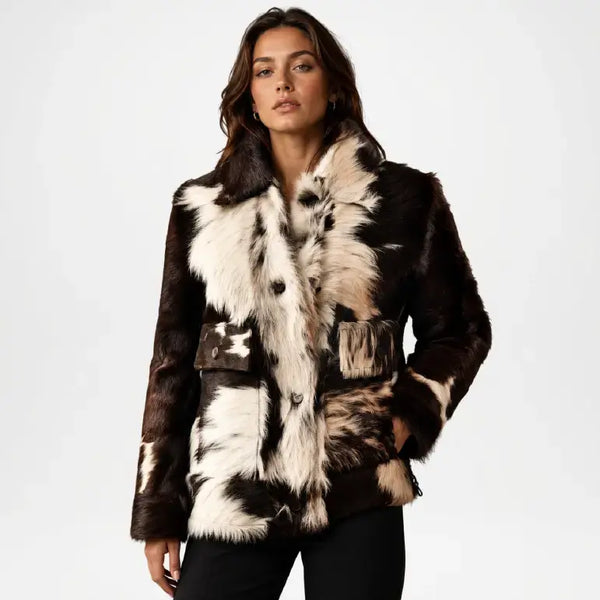
Buffalo Leather vs Cow Leather: Key Differences
|
Feature |
Buffalo Leather |
Cow Leather |
|
Grain texture |
Coarse, pebbled, natural markings |
Smooth, fine, uniform |
|
Hide thickness |
1.4-2mm average, denser fibers |
1-1.6mm average, moderate density |
|
Durability |
Excellent, resists scuffs well |
Excellent, softens with wear |
|
Break-in time |
3-4 weeks of regular wear |
Days to a couple of weeks |
|
Best for |
Rugged, heavy-duty jackets |
Everyday and fashion-forward jackets |
|
Price |
Slightly higher |
Widely available, competitive |
|
Seasonal use |
Best for harsh, cold winters |
Great year-round |

Is Buffalo Leather Stronger Than Cow Leather?
In raw form, buffalo hide and cowhide rank close together in tensile strength. What actually determines durability is hide thickness, tanning method, and leather grade rather than the animal alone. Because buffalo hide isn't stretched thin during tanning, the natural leather fibers stay more tightly packed, which is why buffalo leather often edges out cowhide in resistance to surface scuffs over years of use.
Buffalo Leather vs Cowhide: Look and Feel
Cowhide has a refined, near-polished look straight off the shelf, which is why it's the standard for biker jacket and bomber jacket lines. Buffalo leather carries more natural character in its grain, so no two jackets look exactly alike. If you want visible texture and a rugged personality, buffalo leather delivers instantly. If you want a cleaner silhouette, cow leather wins.
Buffalo Leather vs Calf Leather
Calf leather comes from young cattle and is far more delicate than either buffalo or standard cowhide. It has an extremely fine grain and a soft hand-feel, making it popular for dress jackets, gloves, and accessories rather than heavy outerwear. Buffalo leather is thicker, more abrasion-resistant, and built for daily rough use, while calf leather prioritizes a refined, luxury finish over long-term durability.
Buffalo Leather vs Sheep Leather
Sheepskin and lambskin are prized for being lightweight and naturally soft, with almost no break-in period needed. However, sheep leather has thinner fibers and tears more easily under stress. Buffalo leather is significantly tougher and holds its shape far better over time, making it the stronger choice for anyone who wants a jacket that lasts through years of regular wear rather than occasional styling.
Bison Leather vs Cow Leather
Bison leather is often confused with buffalo leather, but they come from different animals. Bison is the North American animal commonly called "buffalo" in the U.S., while true buffalo leather comes from the Asian water buffalo or African cape buffalo. Bison leather shares buffalo leather's thick, textured character and is also left unstretched to preserve its natural grain. Compared to cow leather, bison leather tends to be heavier and slightly more expensive, with a similarly rugged appeal.
Water Buffalo Leather vs African Buffalo Leather
Most commercial "buffalo leather" jackets use water buffalo hide, since it's more widely farmed and tanned at scale, primarily across South and Southeast Asia. African cape buffalo leather is rarer, thicker, and typically reserved for specialty or exotic leather goods rather than mass-market jackets. For everyday buyers, water buffalo leather offers the same rugged texture and durability at a far more accessible price point.
Which Ages Better Over Time?
Both materials develop a rich patina with age, but differently. Cow leather softens quickly and molds to your body within a few wears. Buffalo leather takes longer to break in but rewards patience with a shape that holds exceptionally well, especially in structured jacket cuts like biker and moto styles.
Buffalo Leather vs Cow Leather in Jackets: Matching Leather to Lifestyle
If you ride a motorcycle daily or work outdoors in cold climates, buffalo leather's density gives extra protection against wind, abrasion, and rough handling. It's a strong match for riders exploring our Biker Leather Jackets collection, where durability outweighs a fast break-in period.
If you prefer lightweight outerwear for daily commuting, layering, or travel, our Bomber Leather Jackets collection offers timeless everyday styles crafted from premium cowhide that softens quickly and moves naturally with your body.
For colder months, our Leather Coats collection uses both hide types in longer silhouettes suited to business casual and formal wear, giving you warmth without sacrificing structure.
Buying Guide: How to Choose the Right Leather Jacket
1. Understand the Leather Grade and Tanning Method
• Full-grain leather keeps the outer layer of the hide intact, including natural markings and grain. It's the strongest, most durable option and the standard across USA Leather Craft's core collection.
• Top-grain leather is sanded and refinished for a smoother look. It's lighter and slightly more affordable but wears out faster than full-grain.
• Chrome tanning is a fast, one-to-two-day process that produces soft, flexible leather at scale, common in most commercial jackets.
• Vegetable tanned leather uses natural tannins and can take several weeks to complete, resulting in a firmer hide that develops a deeper patina over time.
• Avoid bonded or "genuine leather" labels if you want a jacket that lasts beyond a couple of winters.
2. Get the Sizing Right
Leather doesn't stretch the way fabric does, so fit matters from day one.
• Measure your chest at its fullest point and match it to the size chart, not your regular shirt size.
• Leave room for a light sweater underneath if you'll wear the jacket through winter.
• Sleeves should end at your wrist bone, not past your knuckles.
• A slightly snug fit at purchase is normal; both buffalo and cow leather relax with regular wear as the fibers loosen.
3. Match the Jacket to the Season
• Buffalo leather's thickness suits harsh winters, heavy wind, and long outdoor exposure.
• Cow leather works well across fall, spring, and mild winter days, especially in lighter cuts like our Suede Leather Jackets.
• For extreme cold, pair either leather type with a Shearling Leather Jacket for maximum insulation and a natural wax-finish exterior that resists moisture.
4. Care Tips for Both Leather Types
• Wipe down the jacket with a soft, dry cloth after each wear to remove dust and surface oils.
• Condition the leather every three to four months to prevent the natural grain from cracking.
• Store on a padded hanger, away from direct sunlight and humidity, to protect the patina as it develops.
• Never machine wash or dry-clean a genuine leather jacket; spot clean only when necessary.
• Let a wet jacket air dry naturally, away from radiators or direct heat, which can dry out leather fibers and cause premature cracking.
Shop Leather Jackets by Style
Whichever leather you choose, the right silhouette matters just as much as the hide.
Riders looking for extra protection should explore our Biker Leather Jackets, built from heavy-duty buffalo and cowhide for daily road wear. If you prefer lightweight outerwear for city life, our Bomber Leather Jackets collection uses premium cowhide for a comfortable, everyday fit. For a more polished, formal option, our Leather Coats offer long-line cuts in both hide types. Fans of classic American style will like our Varsity Jackets, combining leather sleeves with wool bodies. If you want a softer, low-key texture, our Suede Leather Jackets deliver a refined nap finish. And during winter, Shearling Leather Jackets provide maximum insulation with a natural wool lining built for extreme cold.
Frequently Asked Questions
Is buffalo leather better than cow leather for a jacket?
Neither is universally better. Buffalo leather suits riders and outdoor workers who need extra thickness and scuff resistance. Cow leather suits men who want a lighter jacket that breaks in faster.
Does buffalo leather cost more than cow leather?
Yes, buffalo leather jackets are usually priced slightly higher because the hide is thicker, harder to process, and yields less usable material per animal than cowhide.
Which leather is warmer, buffalo or cow?
Buffalo leather is generally warmer on its own due to its density. For maximum warmth in either leather type, look for a quilted lining or shearling interior.
How long does a full-grain leather jacket last?
A well-maintained full-grain jacket, buffalo or cow leather, can last 15 to 20 years or longer with proper conditioning and storage.
Can I wear a buffalo leather jacket in summer?
It's possible, but the extra thickness suits fall and winter better. For summer evenings, a lighter cowhide or suede jacket is more comfortable.
Is bison leather the same as buffalo leather?
No. Bison leather comes from the North American bison, often mislabeled "buffalo" in the U.S., while true buffalo leather comes from Asian water buffalo or African cape buffalo. Both share a similarly thick, textured character.
Is buffalo leather better than sheep leather?
For durability, yes. Buffalo leather has denser fibers and resists tearing far better than sheepskin, though sheep leather is lighter and softer right away.
What's the difference between buffalo leather and calf leather?
Calf leather is thinner, softer, and more refined, suited to dress wear and accessories. Buffalo leather is thicker and built for heavy daily use.
Does buffalo leather crack over time?
Not if conditioned regularly. Like any full-grain leather, buffalo leather needs conditioning every few months to keep its natural oils intact and prevent cracking.
Is chrome-tanned or vegetable-tanned leather better for jackets?
Chrome-tanned leather is softer and more flexible from day one, while vegetable-tanned leather is firmer and develops a richer patina over years. Most jackets use chrome tanning for comfort, while heritage pieces often favor vegetable tanning.
Does African buffalo leather exist in commercial jackets?
Rarely. Most "buffalo leather" jackets on the market use water buffalo hide. African cape buffalo leather is much rarer and typically used only in specialty or exotic leather goods.
Which leather is easier to maintain, buffalo or cow?
Both need similar care: regular cleaning, periodic conditioning, and dry storage. Cow leather shows dirt and scuffs a bit less due to its smoother finish.